
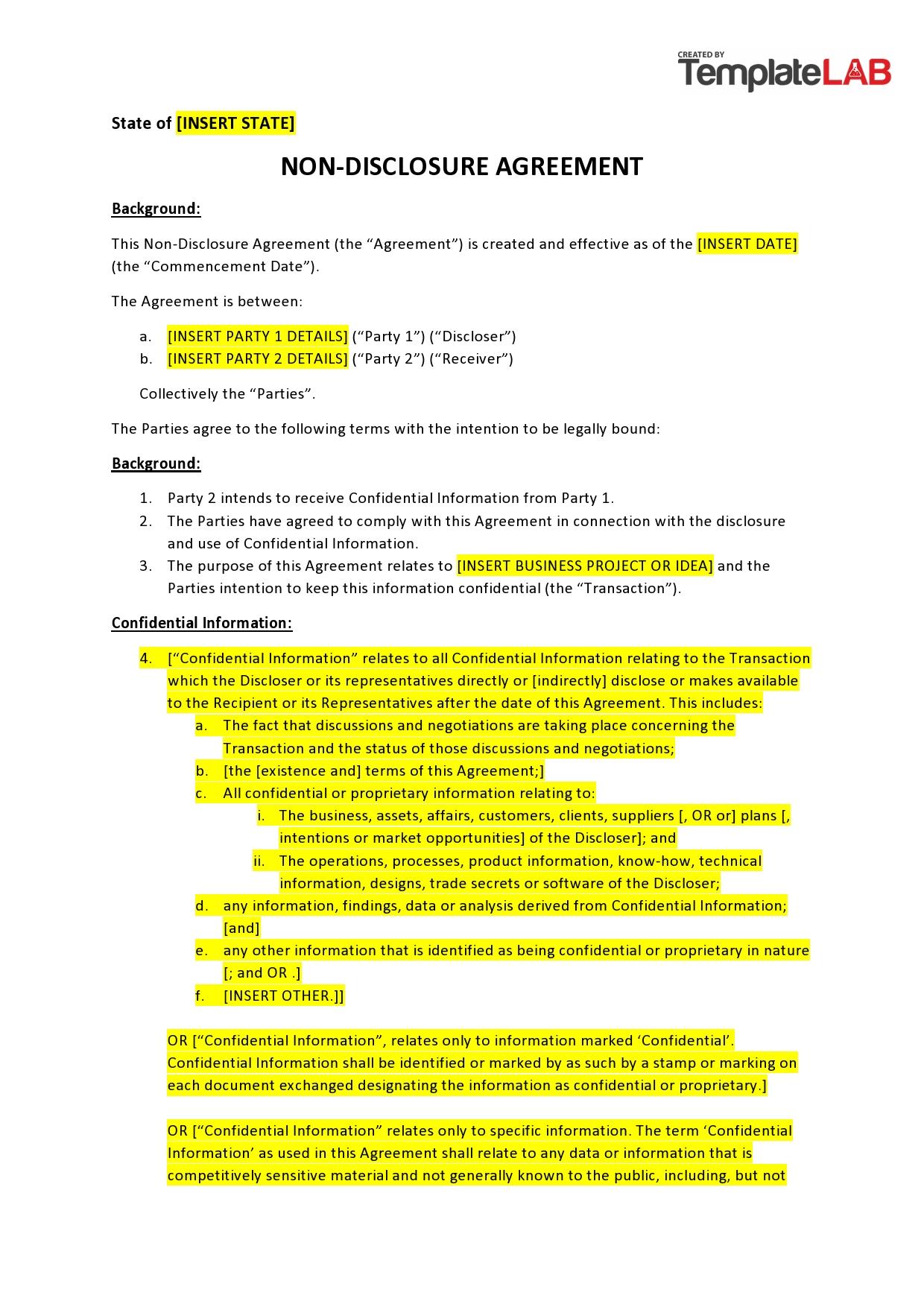
Drafting a Non-Disclosure Agreement (NDA) correctly is crucial for protecting sensitive information in today’s business world. Whether you’re sharing trade secrets, discussing potential partnerships, or simply onboarding new employees, an NDA provides a legal framework to maintain confidentiality. A poorly drafted NDA can be unenforceable, leaving your valuable information vulnerable. This guide provides a step-by-step approach to nda drafting, ensuring your agreements are robust and legally sound.
Key Takeaways:
- Clearly define the confidential information to be protected within the NDA.
- Specify the permitted uses of the confidential information and restrictions on disclosure.
- Ensure the NDA is governed by the appropriate jurisdiction and includes relevant clauses.
- Remember that legal advice is essential for tailoring an NDA to your specific business needs and to ensure enforceability.
Defining Confidential Information in nda drafting
The cornerstone of any effective NDA is a clear and precise definition of what constitutes “confidential information.” Vague or overly broad definitions can render the agreement unenforceable. When nda drafting, think specifically about what you need to protect. This could include:
- Trade Secrets: Formulas, processes, designs, or information that gives your business a competitive edge.
- Financial Information: Revenue projections, profit margins, pricing strategies, and investment details.
- Technical Data: Research and development data, software code, engineering designs, and manufacturing processes.
- Business Plans: Marketing strategies, customer lists, and future product development plans.
Instead of using broad, generic terms, be as specific as possible. For example, instead of saying “all business information,” specify “the client list attached as Exhibit A, which includes names, contact information, and purchase history.” Consider excluding information that is already publicly available, was known to the receiving party prior to the agreement, or becomes publicly known through no fault of the receiving party. This ensures the definition is reasonable and enforceable by us.
Permitted Uses and Restrictions During nda drafting
An NDA should clearly outline what the receiving party can and cannot do with the confidential information. Defining the permitted uses helps prevent misunderstandings and potential breaches.
- Permitted Uses: Specify the exact purpose for which the receiving party is allowed to use the information. For instance, if you’re sharing information for a potential joint venture, the agreement might state that the receiving party can only use the information to evaluate the feasibility of the venture.
- Restrictions on Disclosure: Prohibit the receiving party from disclosing the confidential information to any third party without your written consent. This is crucial to prevent the information from spreading beyond the intended recipient.
- Non-Compete and Non-Solicitation Clauses: Depending on the context, you might also include clauses that prevent the receiving party from competing with your business or soliciting your employees or customers for a certain period after the agreement expires.
Clearly defining these parameters during nda drafting provides a strong legal basis for protecting your confidential information and enforcing the agreement if necessary.
Important Clauses and Governing Law in nda drafting
Beyond defining the confidential information and its permitted uses, several other clauses are critical for a well-drafted NDA.
- Term and Termination: Specify how long the NDA will remain in effect. This could be a fixed period (e.g., five years) or tied to the duration of a specific project or relationship. Also, outline the conditions under which the agreement can be terminated.
- Choice of Law and Jurisdiction: This clause specifies which state’s laws will govern the interpretation and enforcement of the NDA. Choose a jurisdiction that is favorable to your business and where you are likely to pursue legal action if a breach occurs.
- Injunctive Relief: Include a clause that allows you to seek an injunction – a court order preventing the receiving party from further disclosing or using the confidential information – in the event of a breach or threatened breach.
- Integration Clause: This clause states that the NDA represents the entire agreement between the parties and supersedes any prior agreements or understandings, whether written or oral.
- Severability Clause: A severability clause ensures that if one part of the agreement is found to be unenforceable, the remaining parts will still be valid.
Careful consideration of these clauses during nda drafting strengthens the agreement and increases its enforceability.
Seeking Legal Advice for nda drafting
While this guide provides a solid foundation for drafting an NDA, it’s essential to seek legal advice from a qualified attorney. An attorney can assess your specific business needs, tailor the NDA to your unique circumstances, and ensure that it complies with applicable laws.
They can also help you:
- Identify and address potential legal risks.
- Negotiate the terms of the NDA with the other party.
- Ensure the agreement is properly executed and witnessed.
- Enforce the NDA in the event of a breach.
Engaging an attorney for nda drafting is an investment that can save you significant time, money, and legal headaches in the long run. Protecting your confidential information is paramount, and a well-drafted NDA, created with the guidance of legal counsel, is your strongest defense.
